Common Appliance Problems We Repair in Dunwoody, GA
From refrigerators that stop cooling to washing machines that refuse to drain, our local specialists diagnose faults accurately and fix them quickly. Browse common symptoms by appliance type below or schedule an immediate on-site visit.
Same-Day Response
Fast local diagnostics in Dunwoody
Certified Technicians
Factory-trained on all major brands
Upfront Pricing
Clear quotes before repair starts
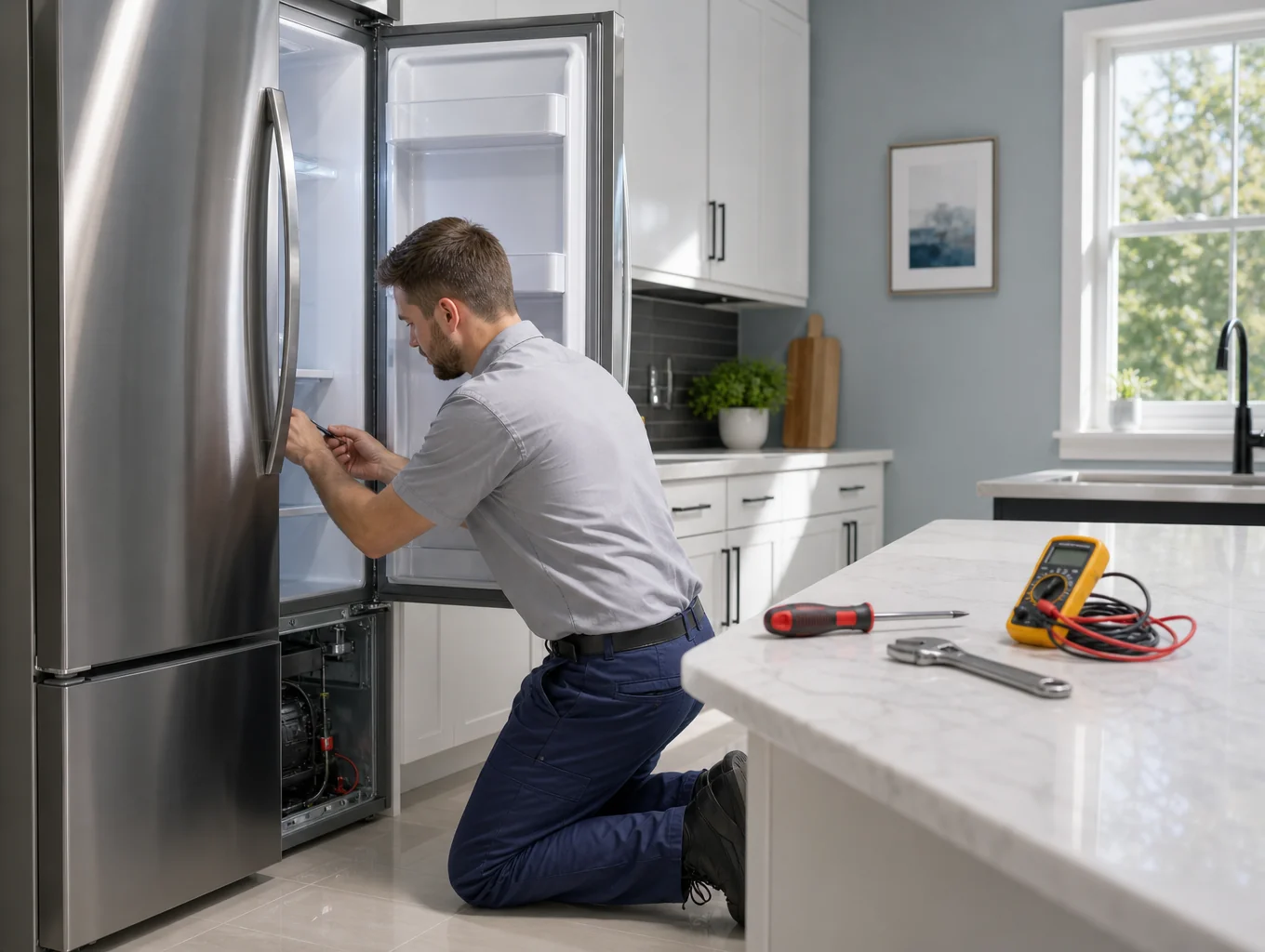
Active Dispatch
Dunwoody & surrounding areas
Common Appliance Symptoms & Troubleshooting
Identify your appliance failure pattern below to see probable root causes, safe initial inspection steps, and certified technician dispatch estimates in Dunwoody, GA.
Failed evaporator fan, dirty condenser coils, defrost thermostat failure, or sealed system leak.
Clean rear coils and listen for condenser motor clicks.
Defrost heater malfunction, damaged door gasket seal, or clogged defrost drain line.
Inspect magnetic door perimeter for air gaps.
Broken heating element coil, failed high-limit thermostat, blown thermal cut-off fuse, or faulty gas igniter.
Clear exterior lint exhaust pipe for restricted airflow.
Burned bake/broil element, weak gas glow-bar igniter, or out-of-spec temperature sensor probe.
Inspect bottom bake element for visible blisters or breaks.
Foreign object lodged in drain pump impeller, kinked discharge hose, or faulty check valve.
Clean front-accessible coin trap and garbage disposal knockout plug.
Clogged micro-filter basket, stuck check valve flapper, or burned drain solenoid motor.
Remove lower spray arm and clear food debris from filter assembly.
Broken drive belt, worn motor drive coupling, failed door lid switch, or stator rotor failure.
Ensure lid switch clicks cleanly when door shuts completely.
Worn tub shock absorbers, snapped suspension springs, or defective balance ring.
Verify unit leveling legs are locked flat against the floor.
Cracked fill hose, worn water inlet valve, compromised tub gasket, or pump seal rupture.
Shut off water supply valve to prevent subfloor damage.
Cracked water filter housing, clogged condensation drain pan, or loose push-fit John Guest fittings.
Check rear plastic water line for pinhole leaks or kinked runs.
Blown thermal fuse, tripped GFCI breaker, failed main control board, or terminal block burnout.
Verify home circuit breaker has not tripped twice.
Defective user interface membrane, child lock engagement, or power surge board failure.
Hold control lock button for 3 full seconds to disengage safety lock.
Worn drum roller bearings, damaged drive belt, failed idler pulley, or tub shock absorber collapse.
Spin empty drum manually to isolate metal-on-metal friction.
Obstruction in chopper blade, failed wash circulation motor, or worn impellers.
Power down unit and inspect bottom filter reservoir for debris.
Calibrated RTD temperature sensor drift, faulty relay board, or damaged door seal gasket.
Place an analog oven thermometer in center rack to measure calibration delta.
Damaged air damper control door stuck open, broken thermistor, or main control board signal error.
Check if top shelf vents are blocked by large food containers.
Frozen fill tube, defective dual water inlet valve, failed ice mold thermostat, or bail arm jammed.
Check if the shutoff wire arm is locked in the upright OFF position.
Restricted water filter cartridge, low house water pressure (under 20 PSI), or failing mold heater.
Replace overdue water filter cartridge to restore adequate line pressure.
Control board sensor communication failure, thermistor out-of-range, or door latch sensor fault.
Write down the exact alphanumeric code (e.g., 4E, F21, E15, LE).
Safety sensor trigger, optical water sensor fault, or main power inverter board malfunction.
Perform a hard reset by flipping the breaker switch off for 5 full minutes.
Cannot find your exact appliance symptom?
Our EPA and brand-certified Dunwoody technicians carry diagnostic multimeters, digital OEM code scanners, and common replacement parts on every service truck.
What Causes Appliance Problems
Most residential appliance breakdowns originate from predictable mechanical wear, thermal breakdown, or micro-electronic faults. Understanding the root failure points helps diagnose issues before secondary damage spreads.
Drive belts, drum rollers, bearings, and pulleys degrade under continuous friction and heavy cycle loads, causing squealing, vibration, or total rotational stall.
Drive motors and wash pumps suffer from coil burnout, seized impellers, or start-capacitor breakdown after years of high-torque demands.
Dryer coils, bake elements, and surface igniters experience metal fatigue from thermal expansion, eventually blistering and breaking the electrical circuit.
Pressure switches, lid lock assemblies, optical dirt sensors, and hall-effect RPM sensors send inaccurate readings to the main system when fouled or oxidized.
Defrost bimetals, operating thermostats, and high-limit thermal fuses lose calibration or trip permanently to safeguard homes against hazardous overheating.
Water inlet solenoids fail to open or stick partially closed, while drain pumps and check valves clog from mineral scaling, lint buildup, or foreign objects.
Refrigeration and front-load washer gaskets crack, stretch, or develop mold pockets, destroying air compression and allowing moisture intrusion or air leaks.
Microprocessors, solder joints, and onboard micro-relays fall victim to line voltage spikes, heat dissipation limits, or moisture short circuits over time.
High-amperage terminal screws loosen from thermal cycles, producing high resistance, scorched spade terminals, and unstable supply voltage drops.
High-Voltage & Pressurized System Warning
Modern appliances use 240V lines, high-capacity capacitors, and sealed refrigerant loops. DIY testing without calibrated multimeters or certified equipment poses severe electrical and fire hazards.
Brands We Service
Our Dunwoody technicians carry genuine factory parts and diagnostic tools for all major household brands.
Do not see your brand listed?
We repair virtually every major residential appliance make and model in the Dunwoody area.
Need Immediate Troubleshooting?
When dealing with severe appliance failures like water flooding, electrical burning, or total cooling loss, prompt action prevents catastrophic home damage. Follow these critical safety steps before your technician arrives.
Immediate Action:
Shut off the local water isolation valve immediately and disconnect power.
Immediate Action:
Switch off the dedicated circuit breaker in your electrical service panel.
Immediate Action:
Keep doors sealed tightly to preserve internal thermal temperature.
Most Common Residential Appliance Failures
Review real-world diagnostic breakdowns and symptom patterns collected across Dunwoody and surrounding metro communities to pinpoint your machine's exact mechanical issue.
Dunwoody service logs indicate thermal regulation and drainage blockages represent nearly 65% of all emergency residential service tickets.
Average In-Home Resolution Time
45 - 90 mins
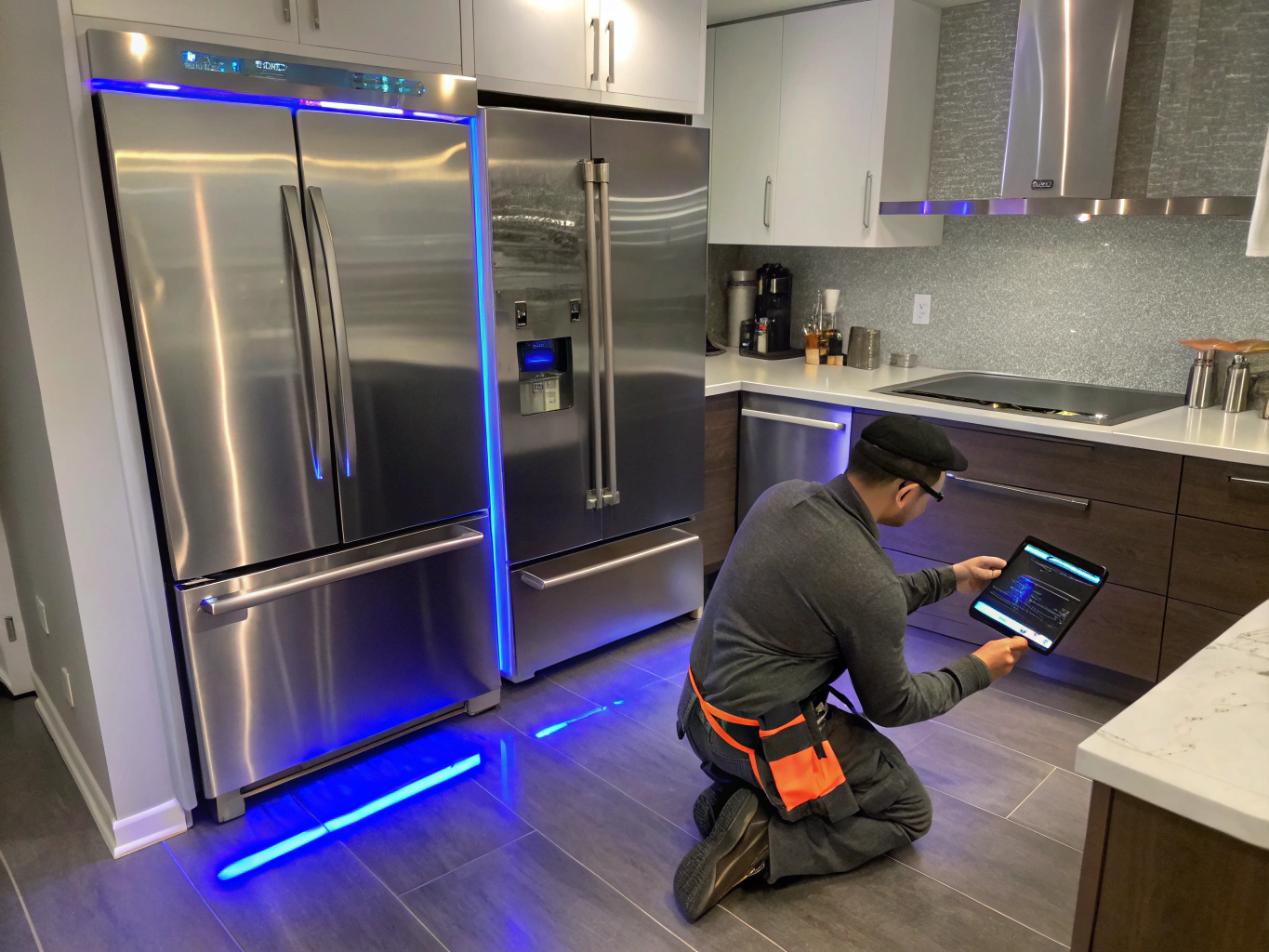
Compressor start relays, clogged coils & thermostat sensor drifts
- Avoid repeated power cycling to protect control boards
- Record any flashing error codes before scheduling
Appliance Troubleshooting & Repair Guide
Practical diagnostic steps for Dunwoody homeowners. Identify common symptoms, evaluate safe DIY fixes, and know exactly when to bring in a certified technician.
Symptom-Based Diagnostics by Appliance
Select your appliance symptom below to review step-by-step DIY checks and professional repair requirements.
Cooling Failures & Temperature Imbalances
Refrigerators & FreezersInadequate cooling, warm fresh food compartments, frost buildup, or continuous compressor running.
Primary Failure Indicators
- Heavy frost buildup covering the evaporator back panel
- Compressor runs continuously but temperatures remain above 42°F (5.5°C)
- Freezer is freezing solid while the fresh food section is warm
- Condenser coils hot to the touch with low internal airflow
DIY Inspection Steps (Safe to Perform)
- 1.1Inspect and vacuum dust/lint buildup from the bottom condenser coils.
- 1.2Verify door gaskets are flush by performing the dollar-bill seal test.
- 1.3Ensure minimum 2-inch clearance around rear and side cabinet vents.
- 1.4Check that internal airflow dampers are not blocked by large food boxes.
Professional Service Recommended
- 2.1Diagnosing sealed-system refrigerant leaks and pressure imbalances.
- 2.2Replacing failed adaptive defrost control boards and defrost heaters.
- 2.3Testing evaporator fan motor thermistors and variable speed brushless motors.
- 2.4Replacing seized rotary or linear inverter compressors.
Drainage, Pumping & Standing Water Issues
Washing Machines & DishwashersWater left in the drum or dishwasher tub after cycle termination, humming pumps, or slow gravity drain.
Primary Failure Indicators
- Standing dirty water remains in the wash tub after the cycle stops
- Loud buzzing sound when the drain pump cycle is triggered
- Washer stops mid-cycle and flashes drain-timeout error
- Dishwasher base pan fills and triggers the anti-flood microswitch
DIY Inspection Steps (Safe to Perform)
- 1.1Unscrew and clean the front-accessible washer coin trap/debris filter.
- 1.2Inspect the sink drain connection, disposal knockout plug, and high loop.
- 1.3Check drain hoses for sharp kinks, bends, or external blockages.
- 1.4Clear food debris from the dishwasher fine mesh filter and sump basin.
Professional Service Recommended
- 2.1Replacing jammed, stripped, or electrically open drain pump motors.
- 2.2Clearing internal coin-choke clogs between the tub and outer pump housing.
- 2.3Testing and replacing optical turbidity sensors and water-level pressure switches.
- 2.4Repairing stuck anti-flood float switches and main control triacs.
Agitation, Drum Spin & Drive Mechanism Failures
Washers & DryersDrum refuses to rotate, clothes come out soaking wet, motor hums without movement, or high-speed spin fails.
Primary Failure Indicators
- Washer fills and drains normally but will not agitate or spin
- Dryer runs heat cycle but drum does not tumble clothes
- Loud clunking or burning rubber smell during spin transition
- Washer lid locks but drive motor fails to engage
DIY Inspection Steps (Safe to Perform)
- 1.1Check for uneven laundry distribution causing out-of-balance trip sensors.
- 1.2Verify that the washer lid or dryer door firmly engages the mechanical striker.
- 1.3Ensure drive belt has not slipped off an accessible idler pulley tensioner.
- 1.4Confirm load size does not exceed maximum drum volume limits.
Professional Service Recommended
- 2.1Replacing cracked motor drive couplers or shredded multi-rib belts.
- 2.2Rebuilding worn drum support rollers, idler assemblies, and rear bearings.
- 2.3Replacing faulty hall-effect rotor position sensors (RPS) on direct-drive units.
- 2.4Testing optical door interlocks, wax motor locks, and stator windings.
Active Leaks & Water Containment Issues
Washers, Refrigerators & DishwashersWater pooling on the floor, weeping solenoid valves, ruptured dispenser lines, or torn door bellows.
Primary Failure Indicators
- Puddle forming beneath the front or rear corner during water fill cycles
- Damp wall or flooring behind the refrigerator ice maker line
- Front-load washer door boot holds trapped water or leaks during wash
- Dishwasher soap door or corner tub gaskets dripping onto cabinetry
DIY Inspection Steps (Safe to Perform)
- 1.1Inspect the rubber or braided steel water inlet fill hoses for cracks or loose nuts.
- 1.2Clean detergent residue build-up around the dispenser drawer siphon tubes.
- 1.3Wipe down and inspect the front door rubber boot seal for tears or trapped coins.
- 1.4Tighten the 1/4-inch compression fitting behind the refrigerator water filter.
Professional Service Recommended
- 2.1Replacing cracked dual-solenoid water inlet valves with internal seepage.
- 2.2Replacing torn outer tub gaskets and worn drive shaft carbon-ceramic seals.
- 2.3Diagnosing internal diverter valve leaks on modern multi-spray arm dishwashers.
- 2.4Replacing cracked internal ice maker mold bodies and fill tube assemblies.
Power, Heating, Ignition & Failure to Start
Ovens, Ranges & DryersAppliance will not power on, bake element stays cold, gas igniters click without flame, or thermal fuse blown.
Primary Failure Indicators
- Dryer tumbles with cold air throughout the entire 60-minute cycle
- Gas oven igniter glows yellow/orange for minutes without opening the safety gas valve
- Electric oven bake or broil element shows zero visible redness or heat
- Control console is completely dark with no response to button inputs
DIY Inspection Steps (Safe to Perform)
- 1.1Check the home service breaker panel for a tripped double-pole 240V breaker.
- 1.2Confirm the gas shutoff valve lever behind the appliance is in line with the pipe.
- 1.3Clean grease or spill residue from cooktop burner caps and spark electrode pins.
- 1.4Perform a hard electrical reset by unplugging the unit for 10 full minutes.
Professional Service Recommended
- 2.1Replacing blown high-limit thermal cut-off fuses and radiant thermostats.
- 2.2Replacing silicon carbide or silicon nitride oven glow igniters drawing under 3.2A.
- 2.3Testing electric heating element coils for internal burnout or ground shorts.
- 2.4Diagnosing faulty direct-spark ignition modules and relay control boards.
Abnormal Mechanical Noises & Severe Vibration
All Major Household AppliancesSquealing, high-pitched screeching, metal-on-metal grinding, or aggressive machine walking.
Primary Failure Indicators
- Jet engine roaring noise during washer high-speed spin extraction
- Continuous metallic screeching whenever the dryer drum rotates
- Harsh grinding noise during refrigerator ice-harvest cycling
- Violent shaking and displacement during initial washer spin acceleration
DIY Inspection Steps (Safe to Perform)
- 1.1Adjust and lock the four leveling legs to eliminate cabinet rocking.
- 1.2Inspect the dryer drum interior with a flashlight for loose screws or coins.
- 1.3Ensure shipping bolts have been fully removed on newly installed washers.
- 1.4Verify the refrigerator cabinet is not vibrating against adjacent cabinetry.
Professional Service Recommended
- 2.1Replacing failed stainless tub spin bearings and corroded aluminum spider arms.
- 2.2Replacing worn blower wheel fan hubs stripped on the drive motor shaft.
- 2.3Replacing fatigued tub suspension springs and hydraulic dampening struts.
- 2.4Diagnosing damaged compressor internal suspension springs.
OEM Diagnostic Error Codes
Standard factory error codes for Samsung, Whirlpool, LG, Bosch, and GE appliances.
| Brand | Error Code | Appliance Type | Fault Description | Recommended Action |
|---|---|---|---|---|
| Samsung | 4E / 4C | Washer / Dishwasher | Water supply error: Unit failed to detect water entering the tub within expected time. | Check inlet valves, clear hose mesh screens, verify home supply water pressure. |
| Samsung | 5E / 5C | Washer / Dishwasher | Drain error: Water failed to evacuate the drum/tub within 10 minutes. | Clean debris filter pump, inspect drain hose for blockages, test drain pump motor. |
| Whirlpool | F05 E02 | Washing Machine | Door lock failure: Control cannot confirm the door lock mechanism is securely engaged. | Inspect door latch striker alignment, check wiring harness, replace door lock switch. |
| Whirlpool | F03 E01 | Dryer | Exhaust thermistor open/shorted: Controller detects erratic temperature readings. | Inspect vent ducting for lint restriction, test exhaust thermistor resistance with multimeter. |
| LG | OE | Washer / Dishwasher | Water outlet error: Drain pump cannot lower water level within specified timeout. | Clear coin trap filter, check drain hose height (under 96 in), test drain motor windings. |
| LG | dE / dE1 | Front Load Washer | Door open error: Microswitch contact not made during cycle initiation. | Verify door latch engages fully; inspect door switch assembly wiring harness. |
| Bosch | E15 | Dishwasher | AquaStop / Flood protection active: Water detected in the bottom drip safety tray. | Shut off water valve, drain bottom tray, inspect base seals and circulation pump housing. |
| Bosch | E24 / E25 | Dishwasher | Drain system blockage: Pump impeller jammed or drain hose backflow valve stuck. | Remove filter cylinder, check white plastic impeller cover, clear trapped glass/seeds. |
| GE | H2O / 4 | Washing Machine | Low water level detected after designated filling interval. | Confirm hot/cold water supply valves are open, inspect inlet solenoid screens. |
| GE | F200 | Oven / Range | Over-temperature runaway detected in oven cavity. | Check RTD sensor probe resistance (approx. 1080 ohms at room temp); inspect control board relay. |
Frequently Asked Diagnostic Questions
Quick answers to everyday questions about repair viability, diagnostic testing, and system resets.
Appliance Problems FAQ
Quick diagnostic answers for common household appliance failures. Find out what causes the problem and when to schedule professional repair.